


"The best places to see the Northern Lights are high-latitude regions located within the 'Aurora Oval' near the Arctic Circle. The top destinations for viewing this colorful light show include Iceland, Norway, Sweden, Finland, Greenland, Canada, and Alaska. These locations offer the dark, clear skies necessary to see the atmospheric reaction caused by solar particles."
Where to See the Northern Lights: A Complete Guide


Subscribe to our newsletters, to get 5$ off your first order
December 16, 2025
But simply booking a ticket to one of these destinations doesn't guarantee a sighting. The natural phenomenon of the Northern Lights is elusive, creating a bucket-list adventure that depends as much on timing and science as it does on geography. In this guide, we explore exactly when to visit these frozen landscapes and what makes each location unique.
What are the Northern Lights?
As explained by NASA, the Aurora Borealis is a dazzling visual result of the connection between the Sun and Earth. The show begins when the Sun releases a stream of charged particles, known as the solar wind, which travels across space and crashes into Earth's magnetosphere.

While our planet's magnetic field shields us from most of this energy, some particles travel down magnetic field lines at the poles and collide with gases in our atmosphere. These collisions cause oxygen and nitrogen atoms to glow, painting the night sky in mesmerizing ribbons of green, pink, and red light.
When is the Best Time to See the Northern Lights?
Determining the best time to see the Northern Lights largely depends on your location. However, as a rule of thumb, winter months (from September to March) provide the best viewing conditions due to longer, darker nights.
A geomagnetic storm can expand the auroras (north and south), bringing them to lower latitudes.
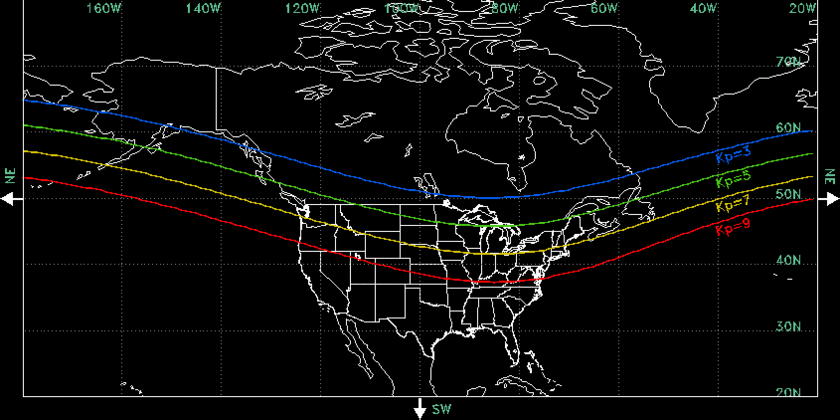
Map of the midnight equatorward boundary of the aurora phenomena at different levels of geomagnetic activity. A Kp=3 represents very low geomagnetic activity, while a Kp=9 represents a very high level.
A reliable Northern Lights forecast is a key tool in planning your Aurora-viewing trip. Websites and apps such as Aurora Reach provide real-time data on solar activity, helping you choose the perfect night for your experience.
Northern Lights: Aurora Borealis from space, International Space Station, NASA time-lapse.
Where is the Best Place to See the Northern Lights?
As we’ve already established, the Aurora Borealis is best seen in high-latitude places, which are regions close to the Earth's poles. High latitude refers to areas situated at latitudes between 60° and 90° north or south of the equator.

So, catching a glimpse of the Northern Lights includes visiting countries in the Northern Hemisphere, such as Norway, Sweden, Finland, Iceland, Canada, Alaska, and Greenland. Keep reading for a closer look at each of them.
1. Northern Lights in Norway
People often call Norway's Tromsø the "Northern Lights capital of the world" because of its accessible location above the Arctic Circle. It offers fantastic opportunities to see the Northern Lights, especially during the polar nights when the Sun doesn't rise at all. Coastal cruises also allow visitors to hunt for the lights away from any city light pollution.
Check out official travel websites like Visit Norway to make planning your trip easier.

Northern Lights in Tromsø, Lofoten islands, Norway.
Best time to see the Northern Lights in Norway: Late September to late March.
2. Northern Lights in Canada
Canada's Yukon territory, in particular, is a fantastic place to view the Aurora Borealis. The city of Whitehorse and the surrounding wilderness offer vast, dark skies that are perfect for viewing without crowds. Several tour operators here specialize in providing warm cabins and guided photography sessions for enthusiasts.
Best time to see the Northern Lights in Canada: Mid-August to mid-April.
3. Northern Lights in Iceland
Iceland offers some of the best views of the Northern Lights because of its volcanic landscapes and glaciers that look spectacular against the colorful sky. Popular viewing spots include Thingvellir National Park and the remote Jökulsárlón Glacier Lagoon. The country's dark locations and high latitude make for perfect viewing conditions during the long winter nights.

Northern Lights in Goðafoss waterfall, Iceland.
Best time to see the Northern Lights in Iceland: Late August to mid-April.
4. Northern Lights in Finland
In Finland, try visiting Finnish Lapland, particularly the town of Rovaniemi, which serves as a gateway to the Arctic. This area is famous for unique glass igloos that allow you to watch the sky from the comfort of your warm bed. The silent, snowy forests provide a magical backdrop for the dancing lights overhead.
Best time to see the Northern Lights in Finland: Late August to April.
5. Northern Lights in Sweden
In Sweden, the Icehotel in Jukkasjärvi provides a unique Northern Lights experience combined with artistic ice architecture. The Abisko National Park is also known for its clear skies and lack of precipitation, often called the "blue hole." A chairlift ride up to the Aurora Sky Station offers one of the best viewing platforms in the world.
Best time to see the Northern Lights in Sweden: September to March.
6. Northern Lights in Alaska
Fairbanks, Alaska, is an excellent location to watch the Aurora due to its position directly under the "Aurora Oval" of high activity. The inland climate often provides clearer skies than coastal areas, increasing your chances of a successful sighting. Many local lodges offer wake-up calls so you never miss a display while sleeping.

Northern Lights above Bear Lake, Alaska.
Best time to see the Northern Lights in Alaska: Late August to late April.
7. Northern Lights in Greenland
For the truly adventurous traveler, Greenland offers dark, unpolluted skies far from major civilization. Kangerlussuaq is a top spot because it has a stable microclimate with many clear nights throughout the winter. Experiencing the lights here often means viewing them in complete silence, surrounded by massive ice sheets.
Best time to see the Northern Lights in Greenland: September to early April.
How to Take a Picture of the Northern Lights?
Capturing the Northern Lights on camera is a dream for many photographers. Here are some tips to help you get the best shots:
- Use a phone with manual settings or a dedicated night mode.
- Keep your phone steady by using a tripod or resting it on a stable surface.
- Use a wide-angle lens attachment to capture more of the sky.
- Set your phone to a longer exposure or use a night photography app to capture more light.

Remember, practice makes perfect, so don't feel discouraged if your first few shots don't turn out as you'd hoped. Even if the Aurora is faint, your long exposure might pick up the brightest stars in the sky, adding even more magic to your photo.
Conclusion: What is the best place to see the Northern Lights?
The right destination for your Aurora adventure depends on your travel style, budget, and tolerance for the cold.
- For maximum accessibility & comfort: Nordic countries like Norway, Finland, and Iceland offer excellent infrastructure and unique accommodations like glass igloos.
- For rugged adventure & dark skies: Alaska, Canada’s Yukon, and Greenland provide vast wilderness areas with minimal light pollution for a true backcountry experience.
- For the best timing: Plan your trip during the winter months (September to March) to take advantage of the long, dark nights required for viewing.
- For photographers: A tripod and long exposure settings are essential to capturing the vibrant greens and pinks that are sometimes faint to the naked eye.
Whether you choose a frozen fjord or a forest cabin, witnessing the Northern Lights is an experience that connects you to the cosmos. If you are interested in learning more about what else you can see in the night sky, give our article "A Tour of the Planets in the Solar System" a read, or discover if the Moon is a star in our myths and misconceptions guide.
Related posts


December 29, 2022